
Mortgage Blogs
Stay up to date with the recent industry news and mortgage trends.

Canada’s Housing Supply Problem Is Bigger Than You Think
What CMHC’s New Housing Supply Report Means for Buyers and Homeowners
Canada’s housing affordability challenge has been front and centre for years. But the latest CMHC Housing Supply Report gives us a clearer picture of just how large the problem really is.
According to the report, restoring housing affordability to levels Canadians experienced in 2019 would require between 430,000 and 480,000 new homes to be built every year for the next decade. That is roughly double the pace of home construction Canada is currently achieving.

For buyers, homeowners, and investors, this report offers valuable insight into where the housing market could be heading and why housing supply remains such a critical piece of the puzzle.
Why Housing Supply Matters So Much
At its core, the housing market is governed by a simple principle: supply and demand.
When more people want homes than there are homes available, prices rise. That is exactly what has happened across Canada over the past decade.
Several factors have increased demand dramatically:
Population growth and immigration
Urban migration toward major cities
Historically low interest rates during the pandemic
A growing number of investors in the housing market
At the same time, housing supply has struggled to keep up. Construction timelines, zoning regulations, labour shortages, and rising development costs have all slowed the ability to build new homes quickly enough.
The CMHC report makes it clear that Canada’s housing shortage is not a small gap. It is a structural issue that will take years of coordinated effort to resolve.
What the Report Says About Major Cities
The CMHC report looks closely at housing supply across Canada’s largest metropolitan areas.
Some of the key findings include:
Montreal faces the largest housing supply gap among major cities
Toronto needs roughly a 70 percent increase in construction to improve affordability
Vancouver requires thousands of additional homes each year beyond current projections
Ottawa Gatineau also faces a significant supply shortage
Edmonton is one of the few markets where projected supply may meet demand by 2035
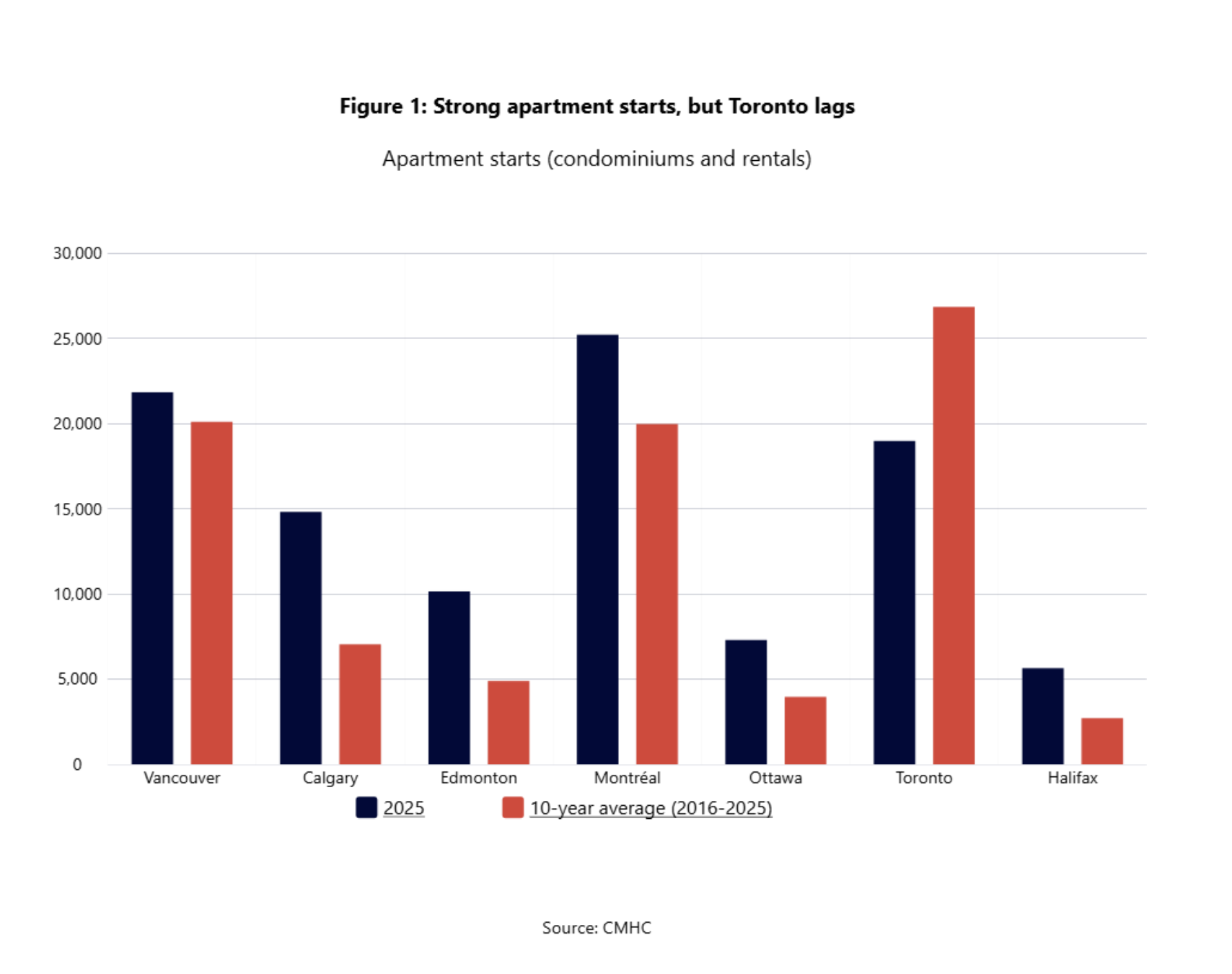
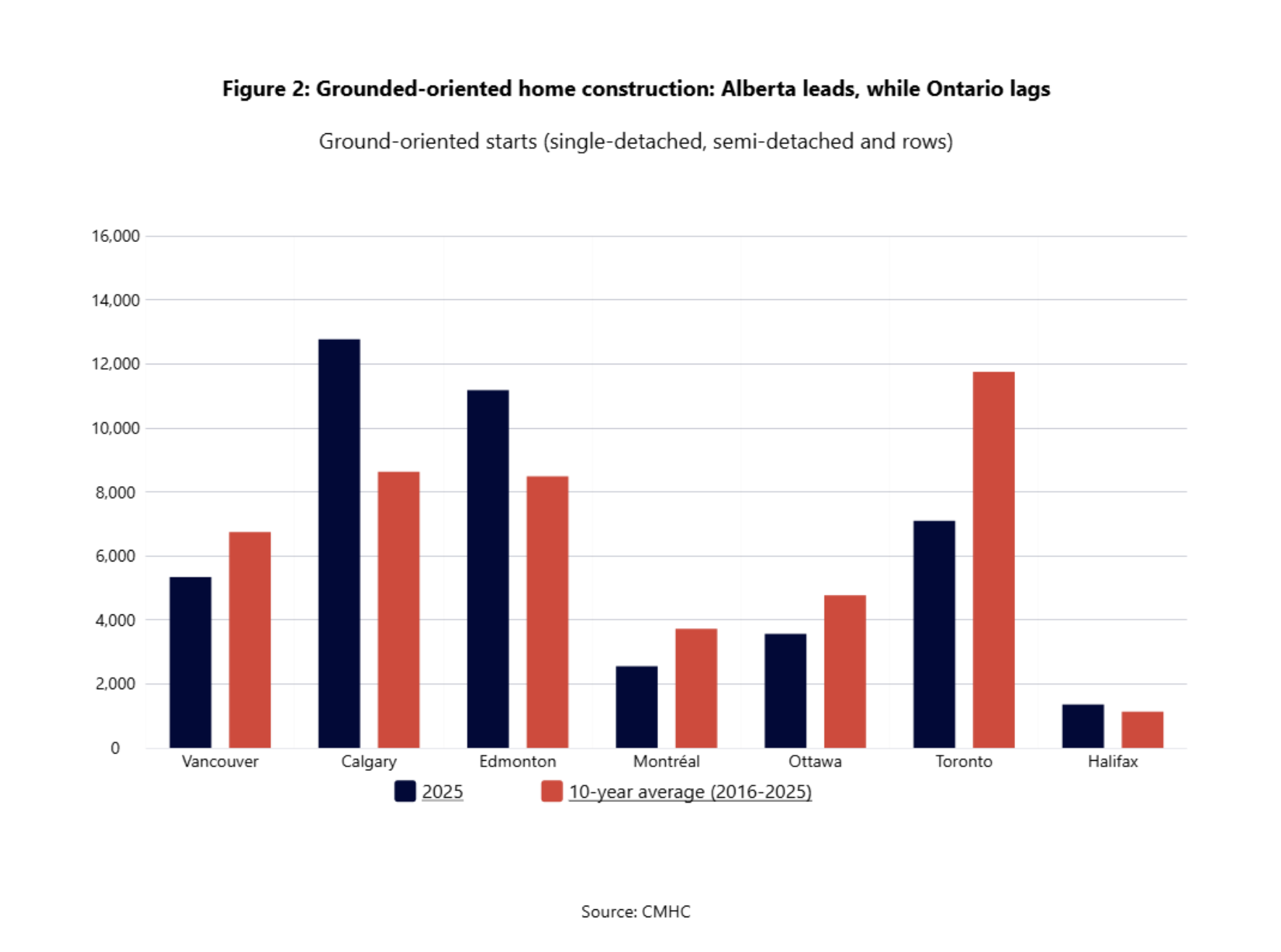
These differences highlight something important. Canada does not have just one housing market. Each city has its own supply challenges, economic conditions, and population trends.
The Growing Role of Rental Housing
Another key trend highlighted in the housing supply research is the growth of purpose built rental housing.
Developers across Canada have increasingly shifted toward rental projects instead of condominiums. This shift is happening for several reasons:
Condo presales have slowed in expensive markets
Investors have become more cautious
Rental demand has surged in major cities
For renters, this could mean more options becoming available over the next few years. For investors, it signals a shift in where opportunities may exist in the housing market.
Why Condo Development Has Slowed
In several major markets, condo construction has slowed due to weaker presales and rising development costs.
When developers cannot secure enough buyers before construction begins, many projects are delayed or cancelled.
This slowdown can create ripple effects in the housing market because condominiums often represent a large share of new housing supply in major cities.
What This Means for Buyers

For buyers, the housing supply report highlights an important reality.
Housing supply challenges will not be solved overnight.
Even if governments accelerate approvals, encourage development, and increase construction capacity, it could take years before supply fully catches up with demand.
That means several things for buyers:
Housing prices may remain resilient over the long term
Competition for well priced homes could continue
Strategic planning and mortgage preparation will remain essential
Buyers who understand these trends can make more informed decisions about when and how to enter the market.
What It Means for Current Homeowners
For homeowners, the report reinforces the long term value of real estate in Canada.
Limited supply combined with strong population growth tends to support property values over time.
However, the market will likely experience cycles along the way. Interest rates, economic conditions, and construction trends will all influence short term price movements.
Homeowners considering refinancing, purchasing investment property, or upgrading their home should keep these supply trends in mind when planning their next move.
The Road to Better Housing Affordability
Improving affordability in Canada will require more than just building more homes.
The CMHC report highlights several areas where change is needed:
Faster development approvals
Reduced regulatory barriers
Increased construction labour and skilled trades
Innovation in building technologies
Greater private sector investment in housing
Addressing these challenges will require cooperation between governments, developers, lenders, and the construction industry.
How Buyers Can Prepare for the Next Phase of the Market
While large scale housing policy changes take time, buyers and homeowners can still take proactive steps today.
Here are a few strategies to consider:
Review your mortgage options regularly
Understand how interest rate changes affect affordability
Get pre approved before beginning your home search
Consider different housing types or neighbourhoods
Work with a mortgage professional who understands market trends
The housing market is constantly evolving, and staying informed can make a significant difference when making financial decisions.
Final Thoughts on Canada’s Housing Supply Challenge
The CMHC Housing Supply Report confirms what many Canadians have already experienced firsthand.
Housing supply remains one of the most important factors shaping the future of the real estate market.
While solutions will take time, understanding the bigger picture can help buyers, homeowners, and investors make smarter decisions as the market evolves.
If you are thinking about buying, refinancing, or investing in real estate, I would be happy to help you explore your options.
Kelli Dean ~ We Have a Mortgage For That !
📞 403-877-8349
📞 778-694-3863 (FUND)
Let’s create a mortgage strategy that works for your goals today and in the future.

Trusted Guidance, Proven Success

Kelli Dean | Mortgage Broker
(403) 877-8349
Assistance Hours
Mon – Fri 9:00am – 8:00pm
Saturday/Sunday – CLOSED
Get In Touch With
(403) 877-8349
Assistance Hours
Mon – Fri 9:00am – 8:00pm
Saturday/Sunday – CLOSED
Contact Us



© 2026 KELLI DEAN MORTGAGES - All Rights Reserved.
Kelli Dean, Mortgage Broker 504341
Verico Compass Group